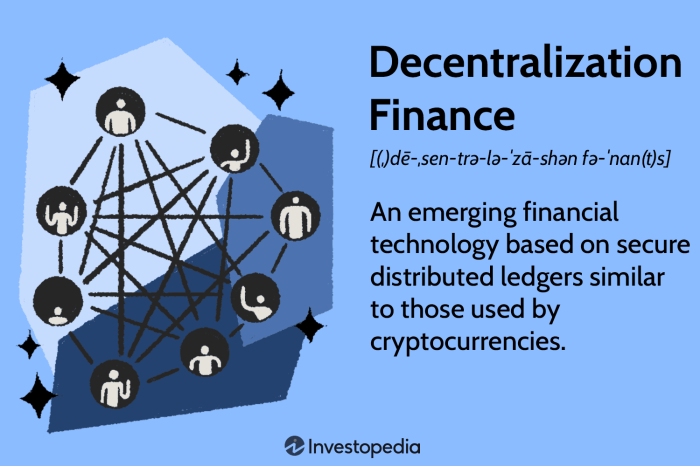
Decentralized finance (DeFi) presents a compelling alternative to traditional financial systems, offering exciting opportunities but also significant risks. This exploration delves into the core principles of DeFi, examining its potential benefits and drawbacks to help you determine if it aligns with your investment goals and risk tolerance. We’ll navigate the complexities of yield farming, liquidity provision, and staking, while considering the crucial aspects of security, regulation, and portfolio diversification within this rapidly evolving landscape.
Understanding DeFi requires grasping its decentralized nature, contrasting it with the centralized control of traditional banks and institutions. This decentralized structure, powered by blockchain technology, promises greater transparency, accessibility, and potentially higher returns. However, it also introduces unique risks, including smart contract vulnerabilities and regulatory uncertainty. This guide aims to equip you with the knowledge to make informed decisions, weighing the potential rewards against the inherent challenges.
Understanding Decentralized Finance (DeFi)
Decentralized Finance, or DeFi, represents a paradigm shift in the financial industry, moving away from centralized institutions like banks and towards a system built on blockchain technology. This shift promises greater transparency, accessibility, and potentially lower costs, but also introduces new risks. Understanding the core principles and applications of DeFi is crucial before considering any investment.DeFi operates on the principles of decentralization, transparency, and programmability.
Unlike traditional finance, which relies on intermediaries like banks and brokers, DeFi leverages smart contracts and blockchain technology to automate financial processes. This eliminates the need for trusted third parties, increasing efficiency and potentially reducing fees. The transparency inherent in blockchain technology allows anyone to view transactions, enhancing accountability and reducing the potential for fraud. Programmability allows for the creation of innovative financial products and services that were previously impossible or impractical.
Common DeFi Protocols and Their Functionalities
Several core protocols underpin the DeFi ecosystem, each offering unique functionalities. Lending and borrowing protocols, such as Aave and Compound, allow users to lend or borrow cryptocurrencies, earning interest on their deposits or accessing loans without traditional credit checks. Staking protocols, such as Lido and Rocket Pool, enable users to lock up their crypto assets to secure a blockchain network and earn rewards in return.
Decentralized exchanges (DEXs), like Uniswap and SushiSwap, allow for peer-to-peer trading of cryptocurrencies without intermediaries, offering greater liquidity and price discovery. Yield farming involves strategically deploying capital across various DeFi protocols to maximize returns, often involving complex strategies and significant risk.
Real-World DeFi Applications and Their Impact
DeFi’s impact extends beyond simple lending and borrowing. Micro-lending platforms are using DeFi to provide access to credit for underserved populations in developing countries, bypassing traditional banking systems. Decentralized stablecoins, like DAI and USDC, offer alternatives to fiat currencies, potentially providing more stable and accessible financial instruments. Furthermore, DeFi is enabling the creation of novel financial instruments, such as synthetic assets that mirror the price of traditional assets, opening up new investment opportunities.
The use of DeFi in supply chain finance is also emerging, offering more efficient and transparent tracking of goods and payments.
Risk and Reward Comparison: Traditional Finance vs. DeFi
| Feature | Traditional Finance | Decentralized Finance (DeFi) |
|---|---|---|
| Accessibility | Generally accessible, but subject to regulatory hurdles and geographic limitations. | Potentially more accessible globally, but requires technical understanding and internet access. |
| Security | Relatively secure, with established regulatory frameworks and insurance mechanisms. However, susceptible to fraud and systemic risk. | Security depends on the robustness of the underlying blockchain and smart contracts; vulnerabilities can lead to significant losses. Lack of regulatory oversight creates higher risk. |
| Transparency | Varying levels of transparency, depending on the institution and regulations. | High transparency due to the public nature of blockchain transactions. |
| Regulation | Heavily regulated, providing consumer protections but potentially limiting innovation. | Generally unregulated, offering greater flexibility but lacking consumer protections. |
| Fees | Typically higher fees associated with intermediaries. | Potentially lower fees, but transaction costs and gas fees can vary significantly. |
| Returns | Generally lower returns, but more predictable and stable. | Potentially higher returns, but also significantly higher risk and volatility. |
Assessing Your Risk Tolerance and Investment Goals

Decentralized finance (DeFi) offers exciting opportunities, but it’s crucial to understand the inherent risks before investing. Aligning your DeFi investments with your risk tolerance and financial goals is paramount to achieving a successful and comfortable investment experience. This section will guide you through assessing your risk profile and constructing a portfolio that suits your needs.DeFi investments span a wide spectrum of risk levels, from relatively low-risk stablecoin lending to highly volatile yield farming strategies.
Understanding this spectrum is vital for making informed decisions. Ignoring the inherent risks can lead to significant financial losses. Careful consideration of your personal circumstances and financial goals will help you navigate this complex landscape effectively.
Risk Levels in DeFi Investments
Different DeFi protocols and strategies carry varying degrees of risk. Stablecoins, pegged to fiat currencies like the US dollar, generally offer lower risk, although they are not entirely without risk (e.g., de-pegging events). Lending platforms, where you lend cryptocurrencies to borrowers, also present moderate risk, influenced by the creditworthiness of borrowers and the platform’s security. However, higher potential returns often come with higher risk, such as yield farming strategies that involve complex smart contracts and liquidity provision to decentralized exchanges (DEXs).
These strategies can be highly susceptible to market volatility and smart contract vulnerabilities. Investing in newer, less established protocols also increases risk due to the lack of a proven track record.
Aligning DeFi Investments with Financial Goals
Your financial goals significantly influence your DeFi investment strategy. For example, someone aiming for long-term wealth accumulation might prioritize stable, lower-risk strategies, gradually increasing exposure to higher-risk, higher-reward opportunities as their financial situation strengthens. Conversely, an investor with a shorter time horizon might favor more liquid assets and potentially accept higher risk for faster returns. It is essential to remember that DeFi investments should be part of a broader, well-diversified portfolio.
They should not represent your entire investment strategy, especially if you are risk-averse.
Hypothetical DeFi Portfolio Examples
The following examples illustrate diversified DeFi portfolios tailored to different risk appetites. These are hypothetical examples and should not be considered financial advice. Actual performance may vary significantly.
| Portfolio | Risk Tolerance | Asset Allocation |
|---|---|---|
| Conservative | Low | 70% Stablecoins (e.g., USDC, USDT), 30% Low-Risk Lending Platforms |
| Moderate | Medium | 40% Stablecoins, 30% Lending Platforms, 20% Index Funds (e.g., DeFi index funds), 10% Established DEX Liquidity Provision |
| Aggressive | High | 20% Stablecoins, 30% Lending Platforms, 20% Yield Farming (in established protocols), 20% DEX Liquidity Provision (with careful risk assessment), 10% Investment in promising, but higher-risk DeFi projects |
Factors to Consider Before Investing in DeFi
Before venturing into DeFi, it’s crucial to thoroughly consider several key factors.
Understanding liquidity is essential. Some DeFi assets may be highly illiquid, making it difficult to sell them quickly without significant price impacts. Volatility is another significant concern; DeFi assets can experience extreme price swings in short periods. Regulatory uncertainty also plays a significant role, as the regulatory landscape for DeFi is still evolving, potentially leading to unforeseen legal or compliance issues.
Smart contract risks are inherent in DeFi; vulnerabilities in smart contracts can lead to significant financial losses. Finally, conducting thorough due diligence on the platforms and protocols you are considering is paramount. Researching the team, security audits, and community engagement is crucial to mitigate potential risks.
Exploring Different DeFi Investment Options
Decentralized finance (DeFi) offers a diverse range of investment strategies, each with its own set of risks and rewards. Understanding these options is crucial for making informed decisions and mitigating potential losses. This section will explore three prominent strategies: yield farming, liquidity provision, and staking, comparing their mechanics, benefits, and drawbacks.Yield farming, liquidity provision, and staking represent different approaches to generating passive income within the DeFi ecosystem.
Each method leverages the decentralized nature of blockchain technology to offer opportunities not readily available in traditional finance. However, it’s vital to remember that DeFi investments are inherently risky, and understanding these risks is paramount before participation.
Yield Farming
Yield farming involves lending or depositing crypto assets into decentralized lending platforms to earn interest. These platforms often use automated market makers (AMMs) to facilitate lending and borrowing. Users can earn high yields by supplying liquidity to these AMMs or by lending their assets to borrowers. However, these high yields often come with significant risks, including impermanent loss (the loss incurred when the price of an asset in a liquidity pool changes relative to another asset), smart contract vulnerabilities, and the volatility of the underlying assets.
A successful yield farming strategy requires careful selection of platforms and assets, thorough due diligence, and a strong understanding of the risks involved.
Liquidity Provision
Liquidity provision is the act of supplying crypto assets to decentralized exchanges (DEXs), typically AMMs, to facilitate trading. In return for providing liquidity, providers receive a share of the trading fees generated on the exchange. The potential rewards can be substantial, but similar risks exist as with yield farming. Impermanent loss is a major concern, particularly in volatile market conditions.
Furthermore, the security of the DEX itself is crucial; a compromised platform could result in the loss of deposited assets. Therefore, rigorous research into the reputation and security of the chosen DEX is essential before committing funds.
Staking
Staking involves locking up crypto assets to secure a blockchain network and participate in its consensus mechanism. In return for staking, users receive rewards in the form of newly minted tokens or transaction fees. Staking is generally considered less risky than yield farming or liquidity provision, as it typically involves less exposure to impermanent loss and smart contract vulnerabilities.
However, the rewards from staking are often lower than those offered by yield farming or liquidity provision. The choice of which blockchain to stake on will influence the potential rewards and associated risks.
A Step-by-Step Guide to Participating in a DeFi Protocol
Before engaging with any DeFi protocol, thorough research is paramount. This includes evaluating the platform’s security audits, team reputation, and community engagement. Look for evidence of transparent operations and a strong track record.
- Research and Selection: Identify a reputable DeFi protocol after conducting thorough due diligence. Examine the platform’s smart contracts, security audits, and community reputation.
- Wallet Setup: Use a secure and reputable cryptocurrency wallet compatible with the chosen DeFi protocol. Hardware wallets offer the highest level of security.
- Asset Transfer: Carefully transfer the desired crypto assets from your exchange or wallet to the DeFi protocol’s designated address. Double-check the address to avoid irreversible losses.
- Protocol Interaction: Follow the protocol’s instructions to deposit or stake your assets. Understand the terms and conditions, including any lock-up periods or fees.
- Monitoring and Withdrawal: Regularly monitor your assets and transaction history. When ready to withdraw, follow the protocol’s instructions carefully.
Evaluating the Security of a DeFi Platform
The security of a DeFi platform is paramount. A thorough evaluation should include several key aspects.
- Smart Contract Audits: Check for independent security audits conducted by reputable firms. These audits identify potential vulnerabilities in the platform’s code.
- Team Reputation and Transparency: Research the team behind the platform. Look for transparency in their operations and a commitment to security.
- Community Engagement: An active and engaged community can be a sign of a healthy and secure platform. Monitor community forums and social media for discussions about security concerns.
- Insurance and Risk Mitigation: Consider whether the platform offers any insurance or risk mitigation strategies to protect users’ assets.
Cryptocurrency Investment Considerations within DeFi
Decentralized finance (DeFi) and cryptocurrencies are intrinsically linked. DeFi applications, from lending platforms to decentralized exchanges, rely on cryptocurrencies as their foundational building blocks. Understanding the nuances of cryptocurrency investments within a DeFi context is crucial for navigating this rapidly evolving landscape. This section will explore the relationship between these two, the role of various cryptocurrencies, and strategies for managing inherent risks.DeFi’s functionality depends entirely on cryptocurrencies.
These digital assets serve as collateral, facilitate transactions, and represent ownership within various DeFi protocols. The choice of which cryptocurrencies to use within a DeFi portfolio is a critical decision influencing both potential returns and risk exposure. Different cryptocurrencies offer varying degrees of stability, liquidity, and utility within specific DeFi ecosystems.
The Interplay Between Cryptocurrencies and DeFi Investments
Cryptocurrencies are the lifeblood of DeFi. They act as both the medium of exchange and the underlying assets within the various DeFi protocols. For instance, Ethereum (ETH) plays a dominant role, serving as the native token for many DeFi applications built on its blockchain. Other cryptocurrencies, like stablecoins (e.g., USDC, USDT), provide price stability and are crucial for mitigating volatility risks associated with other crypto assets.
The value of your DeFi investments is directly tied to the performance of the underlying cryptocurrencies used within those protocols. A drop in the price of a specific cryptocurrency could significantly impact the value of your DeFi holdings.
The Roles of Different Cryptocurrencies in DeFi Ecosystems
Various cryptocurrencies fulfill distinct roles within DeFi ecosystems. Some, like ETH and Solana (SOL), serve as the foundation for building decentralized applications (dApps), while others act as governance tokens, giving holders voting rights in the protocol’s decision-making processes. Stablecoins, pegged to fiat currencies like the US dollar, offer price stability, vital for reducing volatility in DeFi transactions and lending/borrowing activities.
Furthermore, some cryptocurrencies are designed specifically for use within particular DeFi protocols, often offering unique functionalities or incentives to users. For example, certain tokens may grant access to exclusive features or reward users for participating in liquidity pools.
Managing Cryptocurrency Risks within a DeFi Portfolio
Investing in DeFi inherently involves significant risk. The cryptocurrency market is highly volatile, and the decentralized nature of DeFi protocols means there is less regulatory oversight than in traditional finance. Diversification is key to mitigating risk. Spread your investments across different cryptocurrencies and DeFi protocols, avoiding over-exposure to any single asset or platform. Thorough due diligence is also essential.
Research the DeFi protocols you are considering, understanding their underlying mechanisms, security measures, and the reputation of the team behind them. Regularly monitor your portfolio and be prepared to adjust your strategy based on market conditions and evolving risks. Remember, the potential for high rewards often comes with equally high risks.
Comparative Analysis of Cryptocurrencies Used in DeFi
Understanding the pros and cons of different cryptocurrencies is essential for informed decision-making. The following table provides a comparison of some commonly used cryptocurrencies in the DeFi space:
| Cryptocurrency | Pros | Cons | DeFi Use Cases |
|---|---|---|---|
| Ethereum (ETH) | Established ecosystem, high liquidity, widely adopted | High transaction fees (gas fees), scalability challenges | Smart contracts, decentralized exchanges (DEXs), lending/borrowing |
| Solana (SOL) | High transaction speed, low fees, growing ecosystem | Relatively newer platform, potential for centralization concerns | DEXs, NFTs, decentralized applications (dApps) |
| Binance Coin (BNB) | Low transaction fees on Binance Smart Chain, strong community | Centralized exchange influence, potential for regulatory scrutiny | DEXs, yield farming, staking |
| USD Coin (USDC) | Stablecoin pegged to the US dollar, low volatility | Reliance on centralized issuers, potential for de-pegging risks | Stable value for DeFi transactions, collateral in lending protocols |
Navigating the Regulatory Landscape of DeFi
The decentralized nature of DeFi presents a significant challenge for regulators worldwide. Currently, there’s no single, globally unified regulatory framework governing DeFi activities. Instead, jurisdictions are adopting varying approaches, leading to a complex and evolving landscape for investors. Understanding this landscape is crucial for mitigating potential risks.The current regulatory environment surrounding DeFi is a patchwork of national and regional initiatives.
Some countries are actively exploring regulatory sandboxes to foster innovation while managing risks, allowing for experimentation with DeFi protocols under controlled conditions. Others are taking a more cautious approach, focusing on existing securities laws to address DeFi projects that resemble traditional financial instruments. This lack of harmonization creates uncertainty and potential for regulatory arbitrage, where projects operate in jurisdictions with less stringent rules.
The Potential Impact of Future Regulations on DeFi Investments
Future regulations will likely significantly shape the DeFi landscape. Increased regulatory scrutiny could lead to greater standardization and transparency within the DeFi ecosystem, potentially boosting investor confidence and attracting institutional capital. However, overly restrictive regulations could stifle innovation and limit the accessibility of DeFi services. For example, strict Know Your Customer (KYC) and Anti-Money Laundering (AML) requirements, while important for combating illicit activities, could also hinder the decentralized ethos of DeFi.
The balance between promoting innovation and ensuring consumer protection will be a key consideration for regulators globally. We can look to the evolving regulatory frameworks around cryptocurrencies more generally as a potential roadmap, though the unique characteristics of DeFi will require tailored approaches.
Understanding Legal and Compliance Aspects Before Investing in DeFi
Before investing in DeFi, it’s essential to understand the legal and compliance implications. This includes being aware of the jurisdiction-specific rules governing the specific DeFi protocols you are considering. Investors should also understand the risks associated with decentralized governance models and the potential lack of recourse in case of disputes or losses. Conducting thorough due diligence on projects, including auditing smart contracts for vulnerabilities, is critical.
Furthermore, understanding the tax implications of DeFi activities in your jurisdiction is crucial, as tax laws around cryptocurrency and DeFi are still evolving. Failure to understand these aspects could lead to significant financial and legal consequences.
Resources for Staying Informed About Changes in DeFi Regulations
Staying updated on the ever-changing regulatory landscape is vital for navigating the DeFi space. Several resources can help investors stay informed:
Several government websites and regulatory bodies regularly publish updates and guidance on cryptocurrency and DeFi regulation. These resources often include reports, consultations, and policy statements.
Industry news outlets and specialized publications dedicated to blockchain and DeFi regularly cover regulatory developments and their impact. These sources offer analysis and commentary from experts in the field.
Legal and consulting firms specializing in blockchain and fintech often publish insightful reports and analyses of emerging regulatory trends. These sources can provide in-depth legal perspectives and guidance.
International organizations like the Financial Stability Board (FSB) and the Organisation for Economic Co-operation and Development (OECD) are actively involved in developing international standards and best practices for regulating cryptocurrencies and DeFi. Their publications provide valuable insights into global regulatory efforts.
Security and Safety in the DeFi Ecosystem
Decentralized finance (DeFi) offers exciting opportunities, but it’s crucial to understand the inherent security risks before investing. The decentralized nature, while promoting transparency and autonomy, also creates vulnerabilities that require careful consideration and proactive mitigation strategies. This section Artikels common threats and provides guidance on safeguarding your assets within the DeFi landscape.The DeFi ecosystem, while innovative, is not immune to security breaches.
Various factors contribute to the risks involved, making a thorough understanding of these threats paramount for any potential investor. A proactive approach to security is essential to mitigate potential losses.
Smart Contract Vulnerabilities
Smart contracts, the backbone of many DeFi applications, are susceptible to vulnerabilities that malicious actors can exploit. Bugs in the code can lead to unintended consequences, such as loss of funds or unauthorized access. For example, the infamous DAO hack in 2016, which exploited a reentrancy vulnerability, resulted in the theft of millions of dollars worth of ether.
Thorough audits and rigorous testing are crucial to minimize these risks. Even after deployment, ongoing monitoring and updates are necessary to address newly discovered vulnerabilities.
DeFi Platform Hacks
DeFi platforms themselves can be targets of sophisticated hacking attempts. These attacks can involve exploiting vulnerabilities in the platform’s code, social engineering tactics targeting users, or even insider threats. The high value of assets locked within DeFi protocols makes them attractive targets for cybercriminals. High-profile hacks have resulted in significant financial losses for users and have shaken confidence in the ecosystem.
The consequences of such breaches can be severe, impacting not only the platform itself but also the trust and reputation of the entire DeFi space.
Best Practices for Securing Digital Assets in DeFi
Protecting your digital assets within the DeFi ecosystem requires a multi-layered approach. This includes using strong, unique passwords for each platform; enabling two-factor authentication (2FA) wherever possible; regularly reviewing transaction history for any suspicious activity; diversifying your investments across multiple platforms to limit the impact of a single breach; and storing your private keys securely offline in a hardware wallet, avoiding keeping them on exchanges or connected devices.
Furthermore, staying informed about security updates and advisories from the platforms you use is vital.
Importance of Reputable and Audited DeFi Platforms
Investing in DeFi platforms that have undergone thorough security audits by reputable firms is crucial. These audits examine the smart contract code for vulnerabilities and help identify potential weaknesses before they can be exploited. While no system is entirely foolproof, choosing audited platforms significantly reduces the risk of encountering vulnerabilities. Looking for platforms with transparent security practices and a proven track record is a key step in mitigating risks.
Transparency regarding the audit process and the availability of the audit reports are also important indicators of a platform’s commitment to security.
Recognizing and Avoiding DeFi Scams and Fraudulent Activities
The DeFi space is unfortunately susceptible to scams and fraudulent activities. These can range from rug pulls (where developers abruptly shut down a project and abscond with user funds) to phishing attacks designed to steal login credentials and private keys. Recognizing red flags is crucial. Be wary of promises of unrealistic returns, unregistered or poorly documented projects, and platforms lacking transparent governance.
Thorough due diligence, including researching the team behind a project and verifying its legitimacy, is essential before investing. Always be skeptical of unsolicited offers and verify information from multiple independent sources before taking action.
Diversification and Portfolio Management in DeFi
Diversification and effective portfolio management are crucial for mitigating risk and potentially maximizing returns within the dynamic landscape of decentralized finance (DeFi). A well-structured DeFi portfolio should account for the inherent volatility of the market and the unique characteristics of different DeFi protocols. This section explores strategies for achieving a balanced and resilient portfolio.
The importance of diversification in DeFi cannot be overstated. DeFi’s decentralized nature, while offering benefits, also exposes investors to a wider range of risks compared to traditional finance. Concentrating investments in a single protocol or asset class leaves the portfolio vulnerable to unforeseen events impacting that specific area. Diversification helps to spread risk across multiple protocols, asset classes, and strategies, thereby reducing the potential for significant losses from a single point of failure.
Risk Management and Return Maximization Strategies
Effective risk management and return maximization in DeFi involve a multi-pronged approach. This includes carefully assessing the risk profiles of different DeFi protocols and assets, implementing appropriate risk mitigation strategies, and dynamically adjusting the portfolio based on market conditions and personal risk tolerance. Strategies can range from employing dollar-cost averaging to hedging techniques using derivatives, and utilizing decentralized exchanges (DEXs) to take advantage of arbitrage opportunities.
A key aspect is understanding the inherent risks of smart contracts and ensuring protocols are audited by reputable firms. For example, a strategy might involve allocating a portion of the portfolio to stablecoins to maintain some level of stability amidst market fluctuations, while another portion might be allocated to higher-risk, higher-reward yield farming opportunities.
DeFi Portfolio Rebalancing
Rebalancing a DeFi portfolio involves adjusting the allocation of assets to maintain the desired level of diversification and risk exposure. This process is typically triggered by significant market movements that cause the portfolio to deviate from its target allocation. For instance, if a particular DeFi token significantly outperforms others, leading to an overweighting of that asset in the portfolio, rebalancing might involve selling some of the outperforming asset and reinvesting the proceeds into underperforming assets to restore the initial target allocation.
This ensures the portfolio remains balanced and prevents excessive exposure to any single asset or protocol. The frequency of rebalancing depends on individual investment goals and market volatility. Some investors might rebalance monthly, while others might do so quarterly or even annually.
Example of a Well-Diversified DeFi Portfolio
A well-diversified DeFi portfolio could be visually represented as a pie chart. Imagine a chart divided into several segments. One large segment (e.g., 30%) might represent stablecoins like USDC or DAI, providing a stable base. Another segment (e.g., 25%) could be allocated to liquid staking protocols, offering staking rewards with relatively low risk. A smaller segment (e.g., 15%) might represent exposure to lending protocols, carefully selecting those with strong track records and security audits.
Another segment (e.g., 15%) could be allocated to decentralized exchanges (DEXs) for trading opportunities and potentially yield farming. Finally, smaller segments (e.g., 5% each) could be dedicated to more speculative investments like promising new DeFi projects (after thorough due diligence) and governance tokens of established protocols. This example demonstrates a diversified approach, mitigating risk by spreading investments across different DeFi sectors and risk profiles.
The exact percentages would depend on individual risk tolerance and investment goals.
The decision of whether or not to invest in DeFi is deeply personal, hinging on your individual financial situation, risk appetite, and understanding of the technology. While DeFi offers potentially lucrative opportunities, it’s crucial to approach it with caution, conducting thorough research, diversifying your portfolio, and prioritizing security. By carefully considering the information presented, you can better assess the potential fit of DeFi within your overall investment strategy, making informed choices that align with your long-term financial objectives.
Remember, professional financial advice is always recommended before making significant investment decisions.
FAQ Compilation
What is the minimum investment required for DeFi?
There’s no minimum investment amount. However, the fees associated with transactions can make smaller investments less efficient.
How can I protect myself from DeFi scams?
Only use reputable and audited platforms. Thoroughly research any project before investing and be wary of unrealistic promises of high returns.
Are DeFi investments insured?
Generally, no. DeFi operates outside traditional financial regulations, meaning the same level of investor protection doesn’t exist.
What are the tax implications of DeFi investments?
Tax laws regarding DeFi vary widely by jurisdiction. Consult a tax professional for personalized advice.
How do I choose a DeFi platform?
Consider factors such as security audits, community reputation, transparency, and the platform’s track record.


