
Navigating the dynamic world of cryptocurrency requires careful consideration of the platforms facilitating your investments. Choosing the right cryptocurrency exchange is paramount, impacting not only the ease of trading but also the security of your assets. This exploration delves into the leading exchanges, examining their features, security measures, and the factors influencing their rankings within the competitive landscape.
Understanding the nuances of centralized versus decentralized exchanges, fee structures, supported cryptocurrencies, and user interface design is crucial for informed decision-making. We’ll also analyze the impact of regulatory changes and emerging trends like DeFi on the future of these platforms, empowering you to make well-informed investment choices.
Introduction to Cryptocurrency Exchanges
Cryptocurrency exchanges are online platforms that facilitate the buying, selling, and trading of cryptocurrencies. They act as intermediaries, connecting buyers and sellers and providing a secure environment for transactions. Their role is crucial in the cryptocurrency market, providing liquidity and enabling the widespread adoption of digital assets. Without exchanges, trading cryptocurrencies would be significantly more difficult and less accessible.Cryptocurrency exchanges can be broadly categorized into different types, each with its own advantages and disadvantages.
Understanding these distinctions is essential for choosing the right platform for your needs.
Types of Cryptocurrency Exchanges
The primary distinction lies between centralized and decentralized exchanges. Centralized exchanges (CEXs) are the most common type. They operate like traditional stock exchanges, acting as custodians of user funds. This means the exchange holds your cryptocurrencies on your behalf. Examples include Coinbase, Binance, and Kraken.
Decentralized exchanges (DEXs), on the other hand, do not hold user funds. Instead, they utilize smart contracts and peer-to-peer transactions to facilitate trading. This approach offers greater security and privacy but often involves higher transaction fees and a less user-friendly interface. Uniswap and SushiSwap are examples of popular DEXs. A less common type is a hybrid exchange, combining features of both centralized and decentralized models to attempt to balance security and user experience.
Key Features to Consider When Choosing a Cryptocurrency Exchange
Selecting the right cryptocurrency exchange requires careful consideration of several factors. Security is paramount. Look for exchanges with robust security measures, including two-factor authentication (2FA), cold storage for a significant portion of their assets, and a proven track record of resisting hacking attempts. Fees are another crucial aspect. Exchanges charge fees for trading, deposits, and withdrawals.
These fees can vary significantly, so comparing fee structures across different platforms is essential. Liquidity refers to the ease with which an asset can be bought or sold without significantly impacting its price. High liquidity is generally desirable, as it ensures you can execute trades quickly and efficiently. The range of supported cryptocurrencies is also important.
Some exchanges offer a wide selection of digital assets, while others focus on a smaller, more curated list. Finally, user experience and customer support should not be overlooked. A user-friendly interface and responsive customer support can make a significant difference in your overall trading experience. Consider factors such as the availability of mobile apps, educational resources, and the speed and helpfulness of customer support channels.
Top Cryptocurrency Exchanges
Choosing the right cryptocurrency exchange is crucial for a successful investment strategy. Different exchanges offer varying levels of security, fees, and supported cryptocurrencies, making a thorough comparison essential before committing your funds. This section provides a comparative overview of leading exchanges to help you make an informed decision.
Top Cryptocurrency Exchanges: A Comparative Overview
Selecting a cryptocurrency exchange involves considering several key factors. The following table compares five major exchanges across these crucial aspects. Note that fees and supported cryptocurrencies can change, so it’s always recommended to check the exchange’s website for the most up-to-date information.
| Exchange Name | Fees | Security Features | Supported Cryptocurrencies | User Interface |
|---|---|---|---|---|
| Binance | Variable, generally competitive; varies by trading pair and volume. | Two-factor authentication (2FA), cold storage for a significant portion of assets, advanced security protocols. | Wide range, including major and numerous altcoins. | Complex, feature-rich, can be overwhelming for beginners. |
| Coinbase | Relatively higher fees compared to some competitors, but simpler fee structure. | Robust security measures, including 2FA, insurance for certain assets. Regulated in many jurisdictions. | Large selection of major cryptocurrencies, but fewer altcoins than Binance. | User-friendly, intuitive interface, suitable for beginners. |
| Kraken | Competitive fees, with options for reduced fees based on trading volume. | Strong security practices, including 2FA, cold storage. | Wide selection of cryptocurrencies, including many altcoins. | Moderately complex interface; more advanced features than Coinbase, but less overwhelming than Binance. |
| KuCoin | Generally low fees, attractive to high-volume traders. | Security features including 2FA, but perhaps less established reputation than the larger exchanges. | Very wide range of cryptocurrencies, including many lesser-known tokens. | Moderately complex interface; caters to both beginners and advanced traders. |
| OKX | Competitive fees, often comparable to Binance. | Employs various security measures, including 2FA and cold storage. | Extensive selection of cryptocurrencies, similar to Binance and KuCoin. | Feature-rich interface; offers a variety of trading tools and options. |
Trading volume data fluctuates constantly. However, as of October 26, 2023, based on data from CoinMarketCap and CoinGecko (reputable sources for cryptocurrency market data), Binance, Coinbase, OKX, Kraken, and Upbit consistently rank among the top 5 exchanges globally by trading volume. The precise ranking can vary daily depending on market activity.
Security Measures Comparison
The security of user funds is paramount when choosing a cryptocurrency exchange. Binance, Coinbase, and Kraken employ robust security measures, but their approaches differ slightly. Binance prioritizes a wide range of security protocols and technologies, while Coinbase emphasizes regulatory compliance and insurance for certain assets. Kraken focuses on a balance of advanced security and user-friendly interface. All three utilize two-factor authentication (2FA) as a standard security practice, but the specific features and implementation details vary.
Regular security audits and transparency in security practices are important considerations when assessing an exchange’s overall security posture.
Factors Affecting Exchange Rankings
The ranking of cryptocurrency exchanges is a dynamic process influenced by a complex interplay of factors. While no single metric dictates an exchange’s position, several key elements contribute significantly to its overall standing in the market. Understanding these factors is crucial for both investors choosing an exchange and for the exchanges themselves striving for market dominance.Several key factors influence the ranking of cryptocurrency exchanges, impacting their reputation, user base, and ultimately, their market share.
These factors are interconnected and often influence each other, creating a complex ecosystem.
Trading Volume
High trading volume generally indicates a liquid market, suggesting a robust and active user base. Exchanges with consistently high trading volumes often rank higher because they offer a wider range of trading opportunities and potentially better price discovery. Conversely, low trading volume can signal a less active market, potentially leading to lower liquidity and wider bid-ask spreads, making it less attractive to traders.
For instance, a hypothetical scenario could involve Exchange A, consistently ranked in the top 10, experiencing a sudden surge in trading volume due to the listing of a highly anticipated new cryptocurrency. This increase in activity could propel Exchange A even higher in the rankings, surpassing other exchanges with previously higher volumes, at least temporarily. This illustrates the immediate and significant impact trading volume can have on an exchange’s perceived desirability and subsequent ranking.
Security Measures
Security is paramount in the cryptocurrency world. Exchanges with robust security protocols, including multi-factor authentication, cold storage for a significant portion of their assets, and regular security audits, tend to attract more users and gain higher rankings. A breach or significant security incident, however, can severely damage an exchange’s reputation and lead to a dramatic drop in rankings, as seen with past instances of major exchange hacks resulting in significant cryptocurrency losses for users and a subsequent loss of trust.
The emphasis on security is thus a crucial factor influencing investor confidence and, consequently, exchange rankings.
Fees and Charges
Transaction fees directly impact the profitability of trading. Exchanges with competitive fee structures, offering lower trading fees or maker-taker fee models that reward liquidity providers, tend to attract a larger user base. Conversely, high fees can deter traders, potentially impacting an exchange’s ranking. The fee structure needs to be balanced with the provision of other services and the overall user experience to maintain a competitive position.
Consider a scenario where Exchange B, previously highly ranked, increases its trading fees significantly. This could cause a shift in users to lower-fee competitors, leading to a decline in trading volume and ultimately a drop in Exchange B’s ranking.
User Experience
A positive user experience is essential for attracting and retaining users. Factors such as the ease of use of the platform’s interface, the availability of customer support, the range of cryptocurrencies offered, and the overall user-friendliness all contribute to an exchange’s ranking. An intuitive and efficient platform enhances the trading experience, encouraging user loyalty and driving higher trading volumes.
Conversely, a clunky interface, poor customer service, or limited cryptocurrency offerings can lead to user dissatisfaction and a lower ranking.
Regulatory Compliance and Changes
Regulatory changes significantly impact the cryptocurrency exchange landscape. Exchanges operating in jurisdictions with stringent regulations may face higher compliance costs, but this can also build trust and attract users seeking a regulated environment. Conversely, exchanges operating in less regulated jurisdictions might attract users seeking anonymity but face greater risks and could potentially suffer reputational damage if regulatory crackdowns occur.
A hypothetical scenario might involve a new regulatory framework being implemented in a major cryptocurrency market. Exchanges fully compliant with these regulations would likely see their rankings improve, while those failing to comply might experience a decline, highlighting the crucial role of regulatory compliance in shaping the exchange ranking landscape.
Cryptocurrency Investment Strategies
Navigating the volatile world of cryptocurrencies requires a well-defined investment strategy. Understanding different approaches and implementing effective risk management are crucial for maximizing potential returns while mitigating losses. This section Artikels several popular strategies, their advantages and disadvantages, and essential risk management techniques.
Dollar-Cost Averaging
Dollar-cost averaging (DCA) involves investing a fixed amount of money into a cryptocurrency at regular intervals, regardless of price fluctuations. This strategy aims to reduce the impact of market volatility by averaging the purchase price over time. For example, an investor might invest $100 into Bitcoin every week, regardless of whether Bitcoin is trading at $20,000 or $30,000. This approach helps mitigate the risk of buying high and selling low.
- Advantages: Reduces the impact of market volatility, simpler to implement than other strategies, emotionally less stressful than trying to time the market.
- Disadvantages: May result in lower returns if the market experiences a sustained upward trend, requires discipline and consistency.
Hodling
Hodling, a term derived from a typographical error, refers to a long-term investment strategy where investors “hold” their cryptocurrencies for an extended period, typically years, regardless of short-term price fluctuations. This strategy relies on the belief that the value of the cryptocurrency will appreciate significantly over time. A classic example is someone who bought Bitcoin in its early days and held onto it for several years, witnessing substantial growth.
- Advantages: Potential for significant long-term returns, less time-consuming than active trading, avoids the emotional stress of frequent trading decisions.
- Disadvantages: Requires significant patience and risk tolerance, potential for significant losses if the cryptocurrency’s value declines substantially, opportunity cost of missing out on potential gains in other investments.
Day Trading
Day trading involves buying and selling cryptocurrencies within a single trading day to profit from short-term price movements. This strategy requires significant market knowledge, technical analysis skills, and a high tolerance for risk. Successful day traders often use charting tools and technical indicators to identify potential trading opportunities. For example, a day trader might buy Ethereum at 9:00 AM and sell it at 3:00 PM, aiming to capitalize on intraday price swings.
- Advantages: Potential for high returns in short periods, flexibility to adjust strategies based on market conditions.
- Disadvantages: Requires significant expertise and time commitment, high risk of substantial losses, emotionally demanding due to constant market monitoring.
Risk Management Techniques
Effective risk management is crucial for all cryptocurrency investment strategies. Diversification, limiting investment size, and setting stop-loss orders are key techniques.
- Diversification: Spreading investments across multiple cryptocurrencies reduces the impact of a single asset’s decline. Instead of investing all funds in Bitcoin, for instance, a diversified portfolio might include Ethereum, Litecoin, and other altcoins.
- Position Sizing: Never invest more than you can afford to lose. This involves carefully calculating the amount of capital allocated to each cryptocurrency investment, considering your risk tolerance and overall financial situation.
- Stop-Loss Orders: These orders automatically sell a cryptocurrency when it reaches a predetermined price, limiting potential losses. For example, if an investor buys Bitcoin at $25,000, they might set a stop-loss order at $22,000 to automatically sell if the price falls below that level.
Security Considerations for Cryptocurrency Exchanges
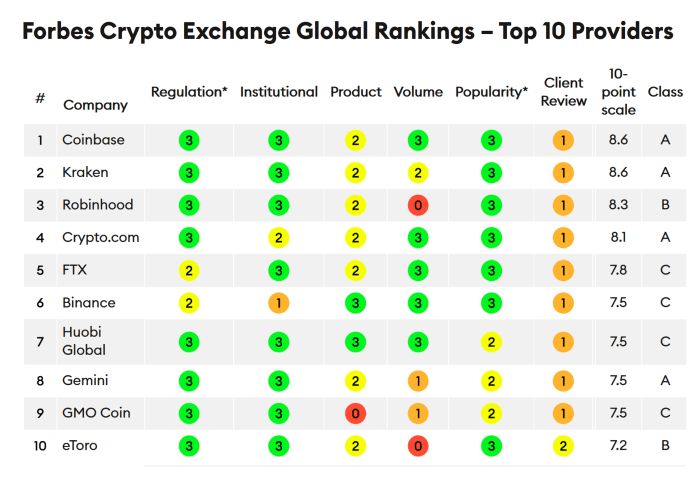
The security of cryptocurrency exchanges is paramount, as these platforms hold significant amounts of digital assets vulnerable to various threats. Understanding these risks and implementing robust security measures is crucial for both the exchanges themselves and their users to mitigate potential losses. Failure to do so can result in devastating financial consequences and reputational damage.The cryptocurrency exchange landscape is constantly evolving, with new threats emerging alongside innovative security protocols.
This section details common security vulnerabilities, best practices for account protection, and the impact of past breaches.
Common Security Threats
Cryptocurrency exchanges face a multitude of security threats, ranging from sophisticated hacking attempts to more straightforward scams and phishing expeditions. These threats exploit vulnerabilities in both the exchange’s infrastructure and user behavior.
- Hacking: Sophisticated hackers often target exchanges to steal user funds directly. This can involve exploiting vulnerabilities in the exchange’s software, databases, or network infrastructure. Attacks may involve exploiting zero-day vulnerabilities, SQL injection flaws, or other technical weaknesses. The scale of such breaches can be enormous, leading to the theft of millions, even billions, of dollars worth of cryptocurrency.
- Scams: Deceptive schemes often target unsuspecting users, aiming to trick them into revealing their login credentials, private keys, or other sensitive information. These scams can take various forms, including fake websites mimicking legitimate exchanges, fraudulent investment opportunities, or deceptive social media campaigns.
- Phishing: Phishing attacks are designed to trick users into divulging their personal information, such as usernames, passwords, and two-factor authentication codes. These attacks often involve cleverly crafted emails or text messages that appear to originate from a legitimate source, such as the cryptocurrency exchange itself.
Best Practices for Securing a Cryptocurrency Exchange Account
Protecting your cryptocurrency exchange account requires a multi-layered approach combining strong passwords, two-factor authentication, and vigilant awareness of potential threats.
- Strong Passwords and Authentication: Use strong, unique passwords for each of your accounts. Implement two-factor authentication (2FA) whenever possible, ideally using an authenticator app rather than SMS-based 2FA. Regularly review and update your passwords.
- Software and Device Security: Keep your operating system and antivirus software up to date. Be cautious about downloading software from untrusted sources. Use a strong firewall and avoid using public Wi-Fi networks to access your exchange account.
- Regular Security Audits: Review your account activity regularly for any unauthorized transactions. Be wary of unsolicited communications claiming to be from the exchange. Report any suspicious activity immediately.
- Limit Funds on Exchange: Only keep the amount of cryptocurrency on the exchange that you need for immediate trading or transactions. Store the majority of your holdings in a secure, offline wallet.
Examples of Past Security Breaches
Several high-profile security breaches have highlighted the vulnerabilities of cryptocurrency exchanges. These incidents underscore the importance of robust security measures.
- Mt. Gox (2014): The collapse of Mt. Gox, once the world’s largest Bitcoin exchange, resulted in the loss of hundreds of thousands of Bitcoins due to a combination of security flaws and mismanagement. This event significantly impacted the cryptocurrency market and led to increased scrutiny of exchange security practices.
- Coincheck (2018): Coincheck, a Japanese cryptocurrency exchange, suffered a significant NEM theft, losing approximately 523 million NEM tokens. This breach highlighted the risks associated with insufficient security measures, particularly regarding hot wallet management.
Regulation and Compliance in the Cryptocurrency Exchange Industry
The cryptocurrency exchange industry operates within a complex and rapidly evolving regulatory landscape. Jurisdictions worldwide are grappling with how to best oversee these platforms, balancing the potential for innovation and economic growth with the need to protect investors and prevent illicit activities like money laundering and terrorist financing. This regulatory uncertainty significantly impacts the operations and growth of cryptocurrency exchanges, influencing their business models and the services they offer.The regulatory landscape for cryptocurrency exchanges varies considerably across different jurisdictions.
Some countries have embraced a relatively permissive approach, establishing clear frameworks for licensing and operation, while others maintain a more cautious stance, either through outright bans or a lack of specific regulations. This inconsistency creates challenges for exchanges operating internationally, forcing them to navigate a patchwork of rules and regulations. The lack of global harmonization in this area poses significant obstacles to the development of a truly global cryptocurrency market.
Key Regulatory Bodies Overseeing Cryptocurrency Exchanges Globally
Several international organizations and national regulatory bodies play crucial roles in shaping the regulatory environment for cryptocurrency exchanges. These bodies often collaborate and share information, contributing to a growing, albeit fragmented, global approach to oversight. Their influence extends to areas such as anti-money laundering (AML) compliance, Know Your Customer (KYC) requirements, and the prevention of market manipulation. Examples include the Financial Action Task Force (FATF), which sets international standards for AML/CFT, and various national financial regulators like the Securities and Exchange Commission (SEC) in the United States and the Financial Conduct Authority (FCA) in the United Kingdom.
These bodies influence national legislation and enforcement actions related to cryptocurrency exchanges.
Comparative Analysis: Regulatory Approaches of the United States and Japan
The United States and Japan represent contrasting approaches to the regulation of cryptocurrency exchanges. The United States, characterized by a decentralized regulatory structure, involves multiple agencies like the SEC, the Commodity Futures Trading Commission (CFTC), and the Financial Crimes Enforcement Network (FinCEN), each with jurisdiction over different aspects of the cryptocurrency market. This fragmented approach can lead to inconsistencies and uncertainty for exchanges.
In contrast, Japan adopted a more centralized approach, with the Financial Services Agency (FSA) taking a leading role in regulating cryptocurrency exchanges through licensing and oversight. This centralized model offers greater clarity and potentially more efficient enforcement, although it may also limit flexibility and innovation. The differing regulatory approaches highlight the ongoing debate regarding the optimal balance between regulatory oversight and fostering innovation in the cryptocurrency space.
The Japanese system, for instance, requires exchanges to register and adhere to strict guidelines, including robust KYC/AML procedures. The US approach, however, is more complex, with different types of cryptocurrencies falling under different regulatory regimes, depending on whether they are deemed securities or commodities. This creates ambiguity and legal challenges for exchanges operating in the US.
The Future of Cryptocurrency Exchanges
The cryptocurrency exchange landscape is poised for significant transformation in the coming years, driven by technological advancements and evolving regulatory frameworks. The integration of decentralized finance (DeFi) and advancements in blockchain technology are reshaping how exchanges operate, offering both exciting opportunities and considerable challenges. Understanding these trends is crucial for navigating the future of this dynamic industry.Emerging Trends and Technologies Impacting Cryptocurrency ExchangesThe convergence of traditional finance and decentralized finance (DeFi) is a key driver of change.
DeFi protocols are increasingly offering decentralized exchange (DEX) functionalities, challenging the dominance of centralized exchanges (CEXs). This shift introduces greater transparency and potentially reduced reliance on intermediaries, but also presents challenges regarding scalability, security, and user experience. Simultaneously, advancements in blockchain technology, such as layer-2 scaling solutions and improved consensus mechanisms, are enhancing the speed, efficiency, and cost-effectiveness of cryptocurrency transactions, impacting the operational efficiency of exchanges.
DeFi’s Influence on Centralized Exchanges
The rise of DEXs powered by protocols like Uniswap and PancakeSwap presents a compelling alternative to CEXs. While CEXs offer convenience and liquidity, DEXs promise greater transparency, security (through the immutability of the blockchain), and reduced counterparty risk. This competition is forcing CEXs to innovate and offer more features, such as improved security measures and lower fees, to remain competitive.
The integration of DeFi functionalities, such as lending and borrowing services, directly within CEX platforms is also becoming increasingly common. This blended model attempts to harness the benefits of both centralized and decentralized approaches.
Hypothetical Cryptocurrency Exchange Landscape in 5 Years
In five years, we might see a more hybridized exchange ecosystem. Centralized exchanges will likely continue to dominate in terms of trading volume, particularly for less technically savvy users, but their operations will be significantly influenced by DeFi. We might observe increased adoption of layer-2 scaling solutions on CEXs to improve transaction speeds and reduce costs. Furthermore, regulatory clarity and the implementation of robust Know Your Customer (KYC) and Anti-Money Laundering (AML) procedures will become more standardized across jurisdictions.
The user experience will likely be more intuitive and user-friendly, potentially incorporating artificial intelligence (AI) for personalized trading recommendations and risk management. DEXs will occupy a significant niche, particularly for users prioritizing decentralization and privacy. The overall landscape will likely be more regulated, secure, and efficient than it is today. For example, a hypothetical scenario could involve a major CEX integrating a high-throughput layer-2 solution like Polygon, enabling near-instantaneous transactions with minimal fees, while also offering a DeFi-integrated platform for lending and borrowing crypto assets.
Challenges and Opportunities Facing Cryptocurrency Exchanges
The future presents both significant challenges and opportunities. Maintaining security in the face of evolving cyber threats is paramount. The increasing sophistication of hacking attempts necessitates continuous investment in robust security infrastructure and protocols. Regulatory uncertainty remains a major hurdle, with varying regulations across different jurisdictions creating operational complexities and compliance challenges. Competition from DEXs and the emergence of new technologies will require CEXs to constantly adapt and innovate.
However, the expanding cryptocurrency market and increasing institutional adoption present substantial opportunities for growth. The integration of innovative technologies, such as AI and machine learning, can enhance operational efficiency, improve security, and provide better user experiences. The development of new financial products and services based on blockchain technology will also open up new avenues for revenue generation.
For instance, the successful integration of a new, highly secure, and efficient blockchain could potentially catapult an exchange to the top of the market share rankings.
Understanding Cryptocurrency Investment
Cryptocurrency investment involves buying and holding digital or virtual currencies like Bitcoin, Ethereum, or others, with the expectation that their value will appreciate over time. This can be a highly lucrative endeavor, but it also carries significant risks due to the volatile nature of the cryptocurrency market. Understanding these risks and employing sound investment strategies is crucial for success.Cryptocurrency markets are known for their extreme volatility.
Price fluctuations can be dramatic and rapid, influenced by a wide range of factors including technological advancements, regulatory changes, market sentiment, and even social media trends. Unlike traditional assets, cryptocurrencies lack the inherent value backed by governments or established institutions, making their price entirely dependent on market speculation and demand.
Successful and Unsuccessful Cryptocurrency Investments
Early investors in Bitcoin, who bought the cryptocurrency when its value was negligible, experienced massive returns as its price soared to record highs. Similarly, those who invested early in Ethereum, capitalizing on the growing popularity of decentralized applications (dApps) and smart contracts, also reaped substantial profits. Conversely, many investors who jumped into the market during periods of hype, driven by FOMO (fear of missing out), without conducting proper research, experienced significant losses when the market corrected.
The collapse of various altcoins (alternative cryptocurrencies) serves as a stark reminder of the inherent risks involved. For instance, the dramatic decline of Luna and TerraUSD in 2022 wiped out billions of dollars in investor value, highlighting the unpredictable nature of the market and the importance of diversification and risk management.
The Importance of Thorough Research Before Investing in Cryptocurrencies
Before investing in any cryptocurrency, conducting comprehensive research is paramount. This involves understanding the underlying technology, the project’s whitepaper (a document outlining the project’s goals and functionality), the team behind the project, the market capitalization, the trading volume, and the overall market sentiment. Analyzing the project’s roadmap, assessing its adoption rate, and considering its competitive landscape are also crucial aspects of due diligence.
Understanding the risks associated with the specific cryptocurrency, including potential regulatory hurdles or technological vulnerabilities, is equally important. Furthermore, it is advisable to only invest what you can afford to lose, as the cryptocurrency market is inherently risky and unpredictable. Diversification across multiple cryptocurrencies can help mitigate some of this risk, but it does not eliminate it entirely.
Ultimately, selecting a cryptocurrency exchange involves a careful balancing act between security, fees, and the range of cryptocurrencies offered. By understanding the factors influencing exchange rankings and employing sound risk management strategies, investors can navigate the complexities of the cryptocurrency market and make informed decisions that align with their individual investment goals. The future of cryptocurrency exchanges is evolving rapidly, and staying informed is key to successful participation.
Essential FAQs
What is the difference between a centralized and decentralized exchange?
Centralized exchanges (CEXs) are controlled by a central authority, offering greater convenience but potentially higher risk. Decentralized exchanges (DEXs) operate on blockchain technology, offering greater security and anonymity but often with less user-friendly interfaces.
How can I protect myself from scams on cryptocurrency exchanges?
Be wary of unsolicited offers, verify the legitimacy of websites and emails, and never share your private keys or seed phrases with anyone. Use strong, unique passwords and enable two-factor authentication.
What are the implications of regulatory changes on cryptocurrency exchanges?
Regulatory changes can impact fees, compliance requirements, and the availability of certain cryptocurrencies on specific exchanges. These changes often aim to enhance investor protection and market integrity.


